


Potash Mine Cutoff Wall
Challenge
An active solution potash mine required a continuous seepage barrier system around its tailings management area to contain brine and prevent migration into surrounding groundwater. Without a properly constructed cutoff wall, there was a risk of brine impacting adjacent soils and groundwater, creating environmental compliance issues and potential disruption to ongoing operations.
The barrier system needed to extend across a large footprint and reach depths of up to 165 feet to intercept permeable zones and ensure long-term containment. Achieving this level of continuity and performance at depth required strict control of trench stability and material properties in saturated ground conditions.
Execution was further complicated by site constraints along the alignment. The wall crossed an active roadway requiring traffic control, passed through a low-clearance utility tray that restricted equipment access, and extended beneath an existing brine pipe rack that required careful coordination to avoid impacts to operations.
Subsurface conditions introduced additional challenges, with large boulders encountered throughout the alignment that required removal to maintain trench continuity. At the same time, high groundwater conditions required continuous management of slurry properties to prevent trench instability or collapse during excavation.
The work was performed over three construction seasons in Saskatchewan, where extreme winter conditions significantly limited the available construction window. Maintaining production and meeting schedule targets required careful planning and execution within these constrained seasonal periods.



Solution
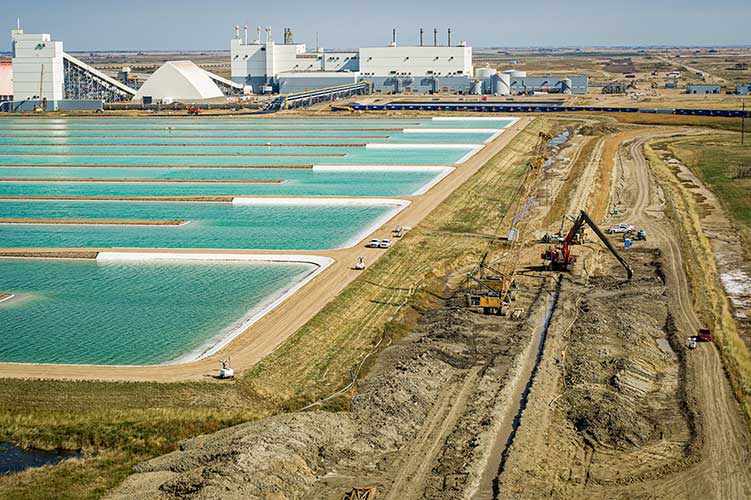
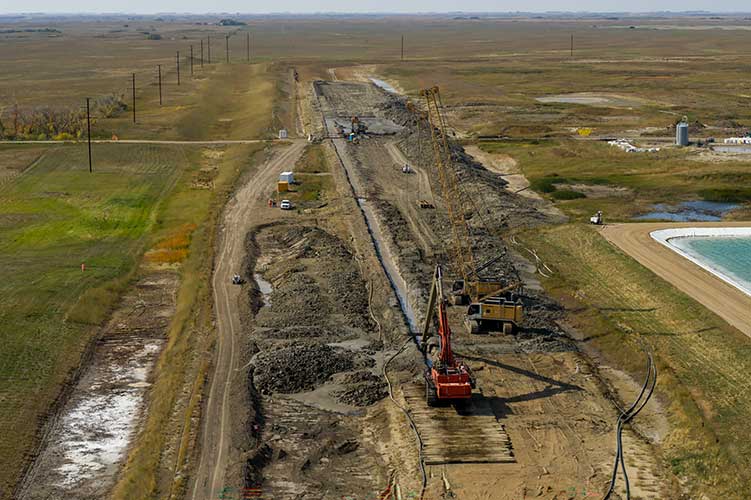
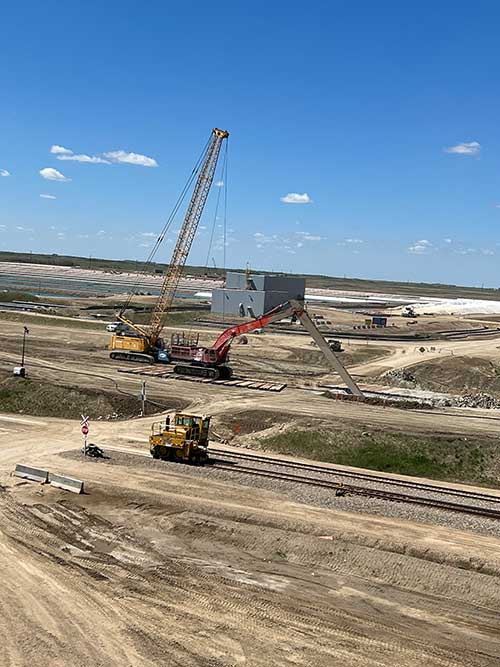
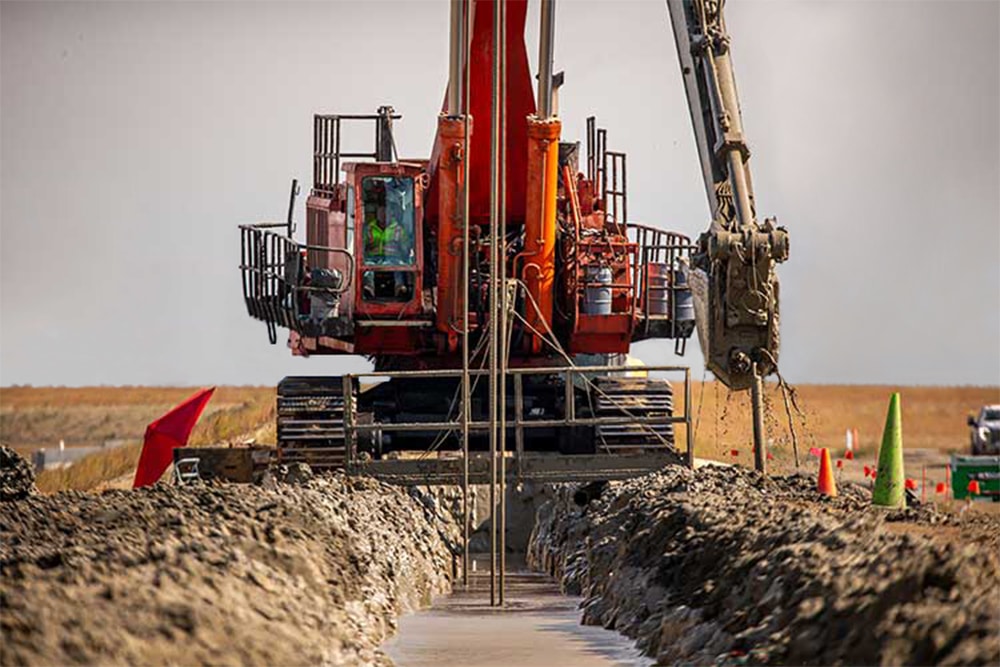
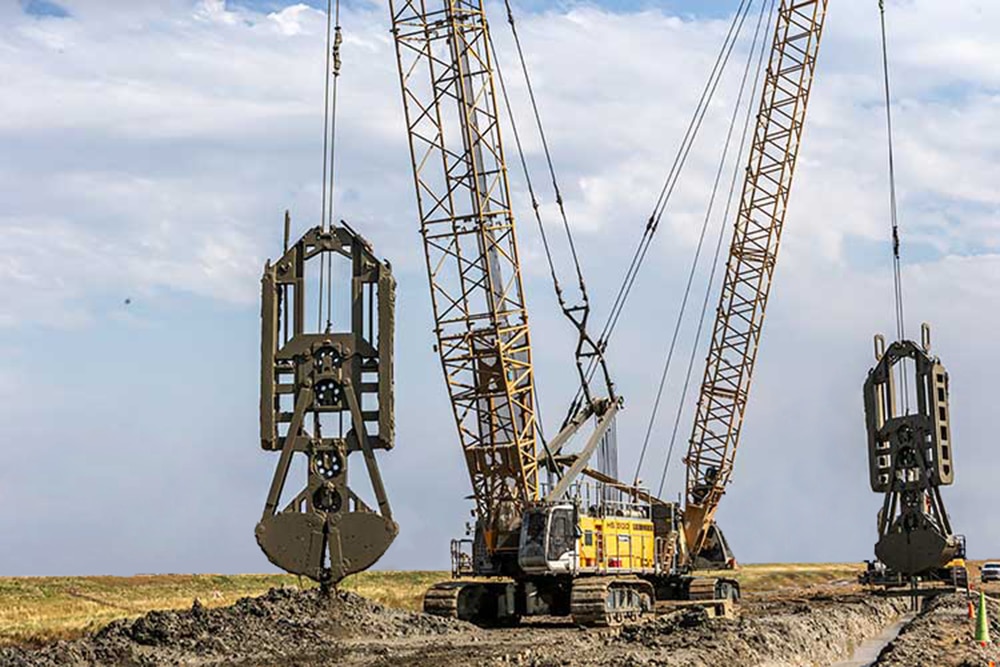
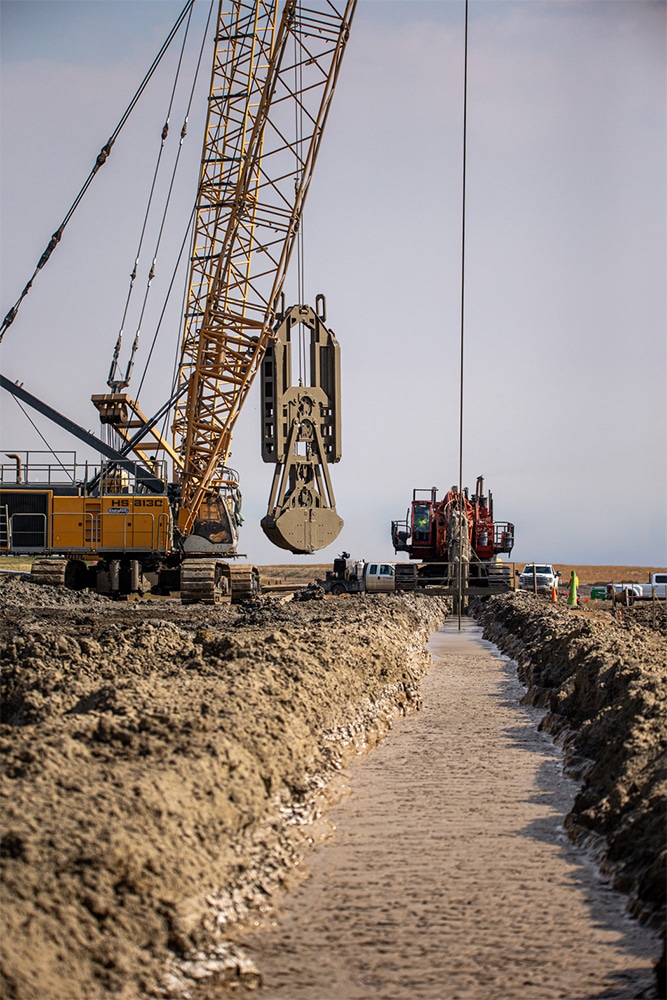
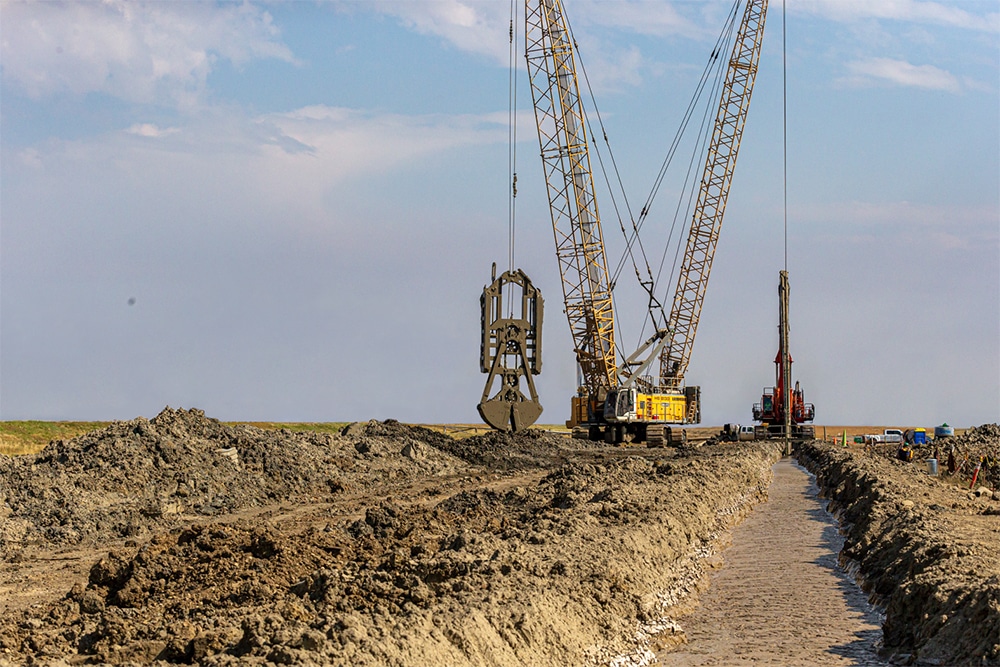
We installed approximately 15,000 linear feet (1.56 million square feet) of cement-bentonite (CB) and soil-bentonite (SB) cutoff wall over three construction seasons using a combination of long-reach excavators and crane-supported clamshells.
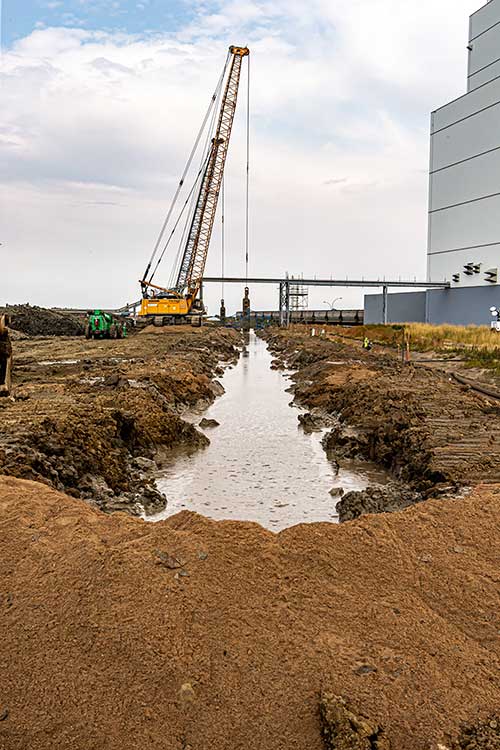
Our approach included pre-trenching followed by slurry-supported excavation to maintain trench stability in saturated conditions. Excavation was performed in stages, with long-reach excavators advancing to intermediate depths before transitioning to crane-supported clamshells for final excavation to depths of up to 165 feet. Spoils were separated and managed to maintain continuous production and site efficiency.
We maintained continuous coordination between excavation and slurry operations, actively managing slurry properties in real time. This included adding sand and maintaining suspension to increase slurry density and support trench stability in challenging ground conditions.
Construction sequencing was adapted to work through site constraints, including traffic control at the road crossing and modified excavation approaches around the utility tray and pipe rack. Over 100 hours of boulder removal, including chiseling and extraction, was required to maintain excavation progress.
To maximize productivity within short construction seasons, we implemented split shifts and night work. During CB wall installation, we operated on a continuous 24-hour schedule to maintain slurry continuity and meet production targets.
Results
The completed cutoff wall system provides long-term containment of brine and protects surrounding groundwater, meeting regulatory requirements and supporting continued mine operations.
We installed over 1.5 million square feet of cutoff wall with zero quality deficiencies and delivered the project with zero lost time incidents across approximately 100,000 manhours.