Forgen’s Focus on High-Energy Hazard Prevention
March 10, 2026
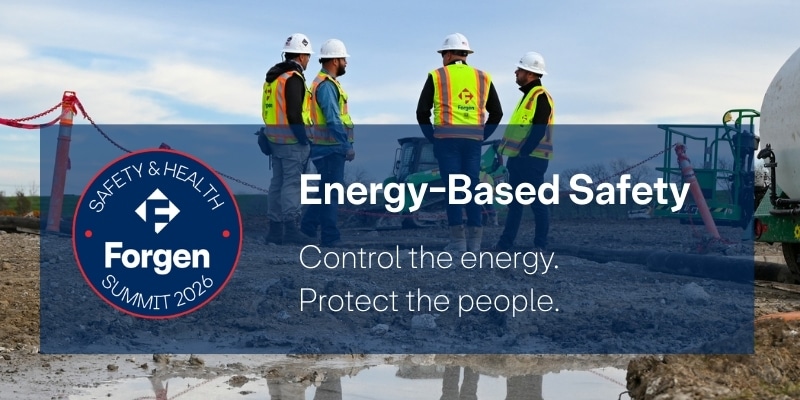
Preventing serious injuries and fatalities is the most important responsibility we have to our people. Every control we put in place when high‑energy hazards are present is about ensuring our teammates go home safe each day and protecting the future we are working toward with Vision 2028.
To honor that commitment, Forgen is elevating high‑energy hazard prevention as a strategic, company‑wide focus. By identifying and controlling the forces that pose the greatest risk in heavy civil construction, we are reinforcing a culture that puts people first and refuses to accept preventable harm as part of the job.
We know the most severe incidents are tied to high-energy hazards. Energy from motion, gravity, pressure, impact, or stored forces is what causes serious injuries. These types of energy can be identified, understood, and controlled. By focusing on what is referred to internally as the “Stuff That Kills You” (STKY), Forgen is aligning leadership, operations, and safety teams around a clear priority: preventing life-altering and life-ending events.
“Serious injuries and fatalities are tied to high-energy hazards. That’s not opinion, it’s physics. We call it the “Stuff That Kills You”, and when you focus on those hazards, a lot of the smaller issues take care of themselves.”
— Palmer Behles, EHS Executive Director
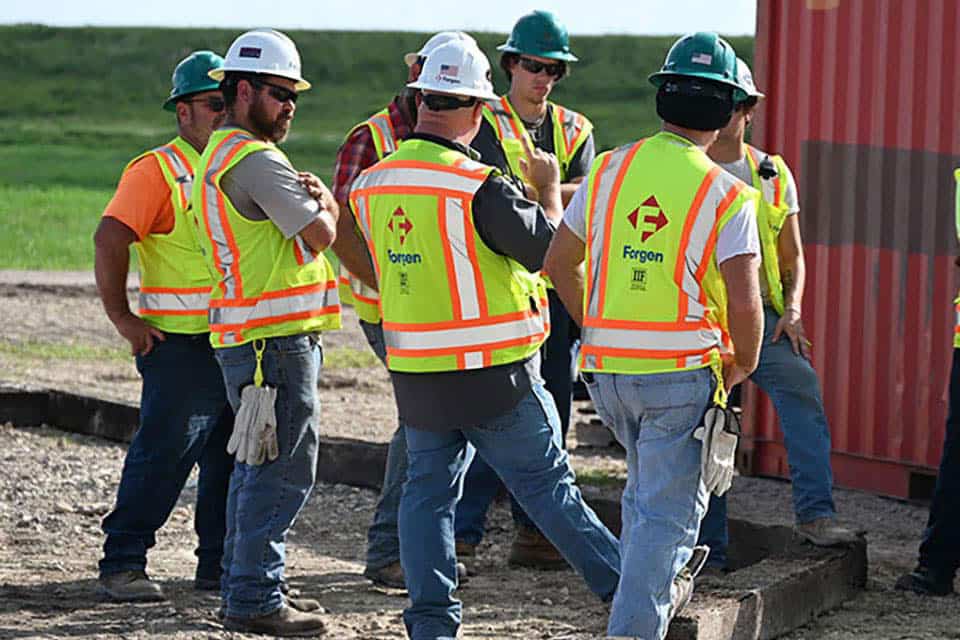
This focus was reinforced during our 2026 company Safety Summit, where operations and Environmental Health and Safety (EHS) leadership aligned on serious injury and fatality prevention, energy-based safety, and the controls that matter most in high-energy work. The discussion centered on practical tools and consistent application in the field.
Team-Driven Safety Culture
Elevating the focus on high-energy hazards requires leadership alignment and clear direction. At Forgen, that begins with CEO, John Dudasch and carries through operations leadership. When leaders are aligned in how they communicate and support Safety, it ensures that serious risk prevention is consistently reinforced across the organization.
Employees understand their health and well-being are the top priorities of the leaders guiding the company. When that message is consistent and visible, it builds trust and reinforces that safety is not just a requirement, but a core value.
That alignment allows expectations around identifying and controlling high-energy hazards to flow naturally from leadership to operations and into the field. It creates consistency in how serious risk is approached and reinforces that protecting people comes first, no matter the project or location.
Consistency and Standardization
A focused high-energy hazard strategy only works if it is applied consistently. One of the advantages of the work we do is that, at its core, it is civil construction. Because of that, safety expectations do not change from project to project or client to client.
Whether working for the Corps of Engineers, a private client, or on a project in Canada, the foundation of the safety program remains the same. Policies and procedures are built to apply across all environments, allowing teams to move from one project to the next without re-learning expectations or adjusting to a different standard.
When field teams and project leadership rely on a single Forgen safety standard, controls for high-energy hazards are applied the same way everywhere we operate. This removes guesswork and strengthens accountability in execution.
Proactive Safety Approach
Preventing serious injuries and fatalities requires identifying high-energy exposure before work begins and ensuring appropriate controls are in place. A proactive safety culture starts long before activity in the field. EHS works closely with operations from project pursuit through planning, mobilization, and execution.
By integrating safety into preconstruction and project planning, teams are better prepared to identify where energy exists, evaluate potential consequences, and apply effective controls. When planning, communication, and execution are connected, teams are better equipped to manage serious risk and adapt as conditions change.
Continuous improvement remains a key part of this approach. Tools and processes are regularly evaluated and refined based on field experience, ensuring that high-energy hazard controls remain practical and effective.
When teams understand where high energy exists and how it behaves, they are better equipped to recognize real risk and act accordingly. When those controls are in place, many of the less serious injuries tend to decline as well. The objective, however, is not simply improving recordable metrics, it is preventing events that change lives in seconds.
Learn More about Forgen’s Safety Culture.